
Reviewed · REYKJAVIK WHALE WATCHING TOURS
Icelandic Horse Riding and Whale Watching Tour from Reykjavik
Iceland’s best animal double act is a sturdy little horse on land and a humpback whale at sea. This tour takes you from the Ishestar stables near Hafnarfjörður across lava-covered moorland, then to Reykjavik Old Harbor for a fast boat into Faxaflói Bay. It is a full half-day with two very different views of Iceland.
I like the tiny groups, capped at five, and the way the riding guides sort people by ability. I also like the practical backup on the boat: if fog or bad luck hides the whales, you receive a free ticket to try again. The catch is simple: wildlife is wild, and fog, wind, cancellations, or a crowded boat can affect the second half.
Key points to know before booking
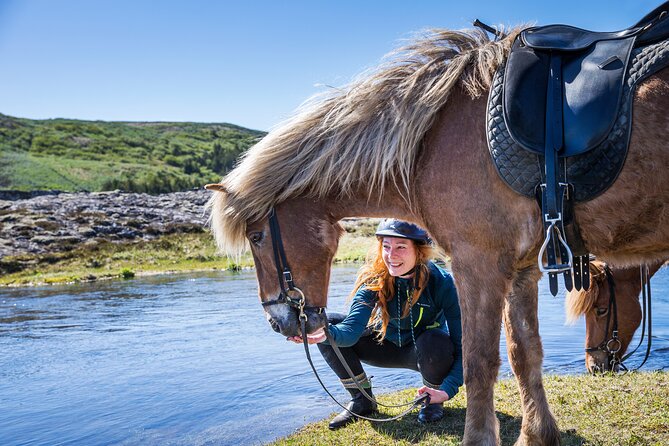
- Icelandic horses use the smooth tölt: This four-beat gait can make the ride comfortable across rough ground.
- The riding groups split by ability: Beginners can take a slower outing while experienced riders may have a faster option.
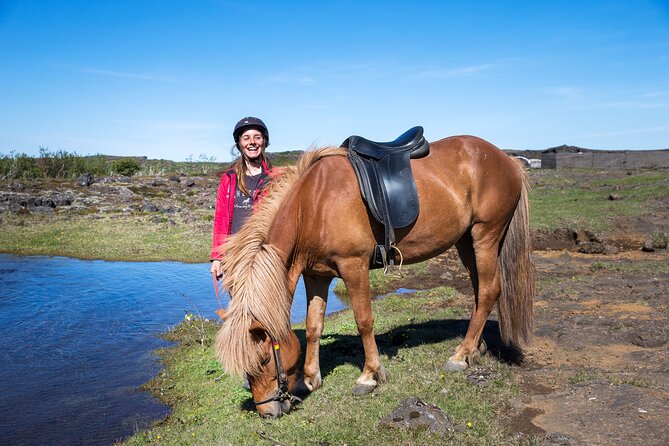
- The horse route crosses lava fields and open moorland: You get scenery and photographs, not just a fenced riding ring.
- The boat reaches the feeding grounds quickly: The high-speed vessel usually takes about 20 to 30 minutes to reach the main viewing area.
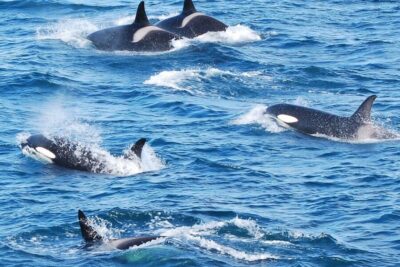
- The usual sightings are minke and humpback whales, dolphins, and porpoises: Puffins may also appear at some times of year.
- No sighting means a free retry: This helps with value, but only if you have another day available.
Two Icelandic traditions in one half-day
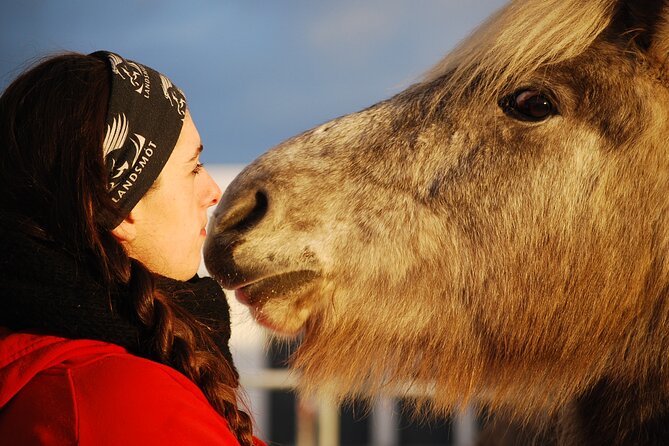
This is a smart pairing if you want more than city streets but have limited time in Reykjavik. The first part gives you close contact with an animal central to Icelandic life. The second takes you offshore to look for whales, dolphins, and seabirds.
The contrast is the pleasure. On horseback, you move slowly enough to notice black lava, open fields, and the horse beneath you. On the boat, you cover distance quickly and wait for a sudden puff, fin, or tail in the bay. You are not paying for one repeated activity.
The tour costs about $233.08 per person, which is a serious price in Iceland. Still, it includes the riding guide, riding equipment, hot drinks after the ride, the whale-watching boat, warm overalls at sea, Wi-Fi, and a free retry if nothing appears. Compared with booking two separate outings and arranging transfers yourself, the combination can be good value.
The price makes less sense if you only want a long horseback ride or if whale watching is your main goal. The schedule gives you a substantial ride, but the boat portion depends heavily on weather and animal behavior.
More Icelandic Horse Riding Tours:
- Reykjavik: Red Lava Horse Riding Tour
★ 4.8 · 2,383 reviews - From Reykjavík: Icelandic Horse Riding Tour in Lava Fields
★ 4.7 · 1,356 reviews - Icelandic Horseback Riding Tour with Pickup Option from Reykjavik
★ 5.0 · 1,145 reviews
Getting to the Ishestar stables near Hafnarfjörður
The listed meeting point is Ishestar Horse Riding Centre at Sörlaskeið 26 in Hafnarfjörður, just outside Reykjavik. The stated start time is 10:00 a.m. Hotel pickup may be available for an extra fee, but you need to arrange and confirm it directly with the supplier.
This detail matters. The tour description refers to pickup from Reykjavik, while the meeting-point information says the activity starts and ends at the riding centre unless transfers are selected. Do not assume hotel transport is included in the $233 price. Confirm the pickup, payment, and return arrangements before the day begins.
One useful lesson from the transfer setup is that the horse operation and whale boat operation may involve separate staff. The connection usually works, but payment and return transport can be handled differently. Keep your confirmation details handy and ask where you should go next.
The group limit of five people is a major plus. You are less likely to spend the morning in a long line of riders, and the guides have more room to help nervous or inexperienced participants.
Meeting Iceland’s horse and finding your pace
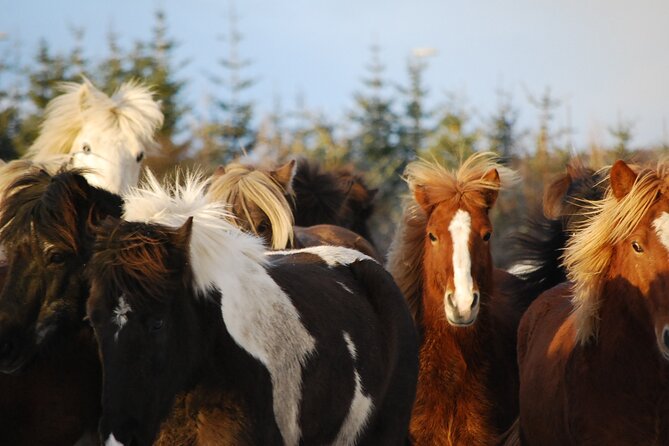
On the ride to the stables, your guide explains the Icelandic horse. Its ancestors arrived in Iceland around the 10th century, and the breed developed in isolation. These horses are small, sure-footed, and famous for the tölt, a smooth four-beat gait distinct from an ordinary walk or trot.
At the stable, you receive a helmet, rubber boots, and rain or warm clothing. After a safety briefing, the guides match horses to riders and allow time to get acquainted before mounting. That pause is especially useful if you are nervous around horses or have little riding experience.
The ride lasts about two and a half hours. You follow trails through open moorland and fields, with lava formations underfoot and broad views around you. The route includes stops for photographs, so you are not expected to choose between enjoying the ride and taking pictures.
The strongest part of the riding operation is its attention to different skill levels. The group may split into a slower section for beginners and a faster one for confident riders. A guide can also walk beside a child who feels unsure. That makes this a better choice for families and mixed-ability groups than a single-speed ride.
Experienced riders should set expectations carefully. One part of the group may spend much of the ride at a steady pace, and a horse can follow closely behind another horse. If you want to practice every gait, including a faster tölt, tell the guide what you hope to do. The route is scenic and friendly, but it is not a private advanced riding lesson.
The age limit is seven. Children aged 14 and older need written parental permission to ride alone. The maximum riding weight is 110 kilograms, or 240 pounds. These rules are firm practical limits, so check them before booking.
Lava fields, open moorland, and good photo stops
The scenery is a large part of the value. You are not simply circling a stable. The trail leads through lava-covered ground and open fields, giving you a close view of the rough volcanic terrain that shapes the area around Reykjavik.
The riding pace lets you notice details that pass quickly from a vehicle window. You may stop to photograph the dark rock, the horses, and the wide open setting. Snow, sunrise, sunshine, and changing weather can each give the route a different feel.
Dress for Iceland rather than for the forecast on your phone. The riding centre provides rainwear and warm clothing, but layers are still sensible. Wear comfortable trousers and expect mud or wet ground. Rubber boots and helmets are supplied.
After returning to the stables, you receive coffee, tea, or hot chocolate. There may also be a small shop and access to tour photographs. These are modest extras, but the hot drink is welcome after sitting outdoors for two and a half hours.
More Reykjavik Whale Watching Tours:
- Reykjavík: Whale Watching and Marine Life Cruise
★ 4.6 · 9,838 reviews - Reykjavík: Whale Watching Cruise on the Amelia Rose Yacht
★ 4.5 · 2,911 reviews - The Original Classic Whale Watching from Reykjavik
★ 4.5 · 2,626 reviews - Reykjavik: Whale Watching Tour with Expert Guide
★ 4.2 · 2,307 reviews
From the stables to Reykjavik Old Harbor
The tour then moves from the riding centre to Reykjavik Old Harbor. You have free time for lunch at your own expense before boarding the whale boat. Bring money or a card for food, because lunch is not included.
This is one point where timing deserves attention. The horse ride, transfer, lunch break, and boat departure all need to fit together. If you plan a separate afternoon appointment, allow plenty of room. The overall experience is advertised at about five and a half hours, but boat schedules and transport can affect the exact finish.
The harbor setting gives you a useful reset. You leave the quiet inland trails and return briefly to the city before heading back out into Faxaflói Bay.
Searching Faxaflói Bay for whales and dolphins
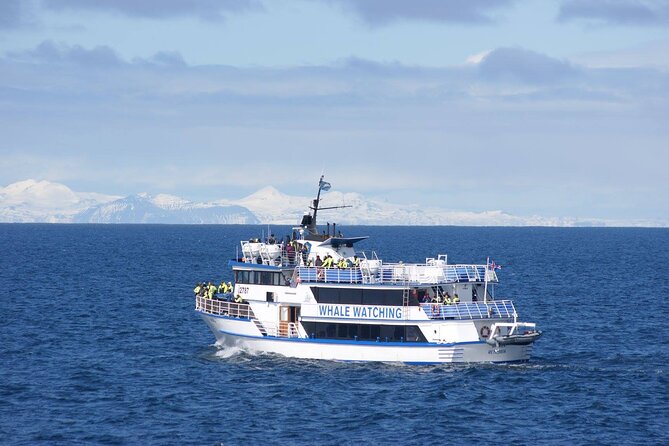
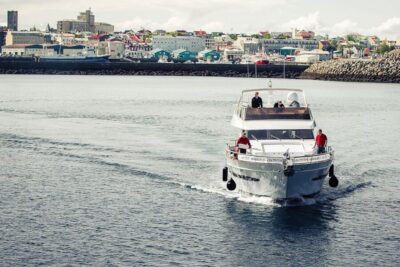
The whale boat is a high-speed vessel with indoor seating, outdoor viewing areas, warm coveralls, Wi-Fi, and an onboard café. It usually reaches the main feeding grounds in about 20 to 30 minutes, which leaves more of the cruise for looking rather than simply traveling.
The common species in the bay are:
- Minke whales
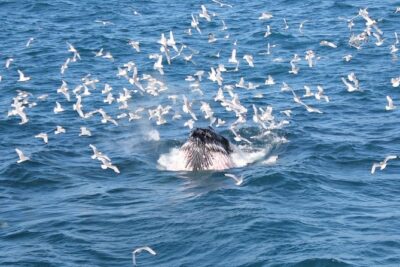
- Humpback whales
- Harbour porpoises
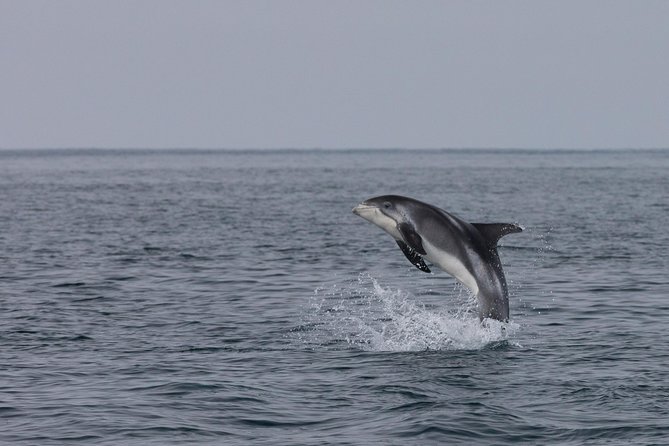
- White-beaked dolphins
Puffins and other seabirds may also appear, depending on conditions and season. Keep your camera ready, but do not spend the entire cruise staring at a screen. A whale may surface only briefly, and the guide’s call may be your best warning.
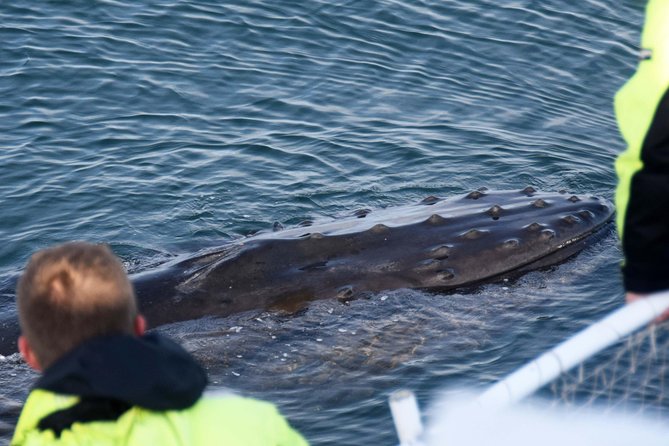
Humpbacks can provide the most dramatic sighting. They may surface close to the boat, show a flipper, slap the water, or raise a tail before disappearing. Minke whales can be harder to spot because their appearances are often quicker and less showy. Dolphins and porpoises may travel in groups, but they can also be easy to miss in choppy water.
The onboard commentary adds useful context. Guides may explain whale size, identify species, and point out activity in the water. The crew also pays attention to the animals’ behavior. If a whale signals that a boat is too close, the captain should give it more space. That is important: a good whale-watching trip is not only about getting near an animal, but about watching without causing stress.
The boat has several viewing levels, but the open deck can be cold even when Reykjavik feels mild. Wear the warm overalls supplied by the operator, and keep a hat and gloves close. If fog rolls in, the indoor cabin and café give you somewhere warm to wait.
The café sells hot drinks, soft drinks, alcoholic drinks, and snacks. A waffle with rhubarb sauce and whipped cream has been a popular choice, though food is not part of the tour price. Bring your own meal or plan to buy lunch at the harbor before departure.
The real risk is weather, not poor planning
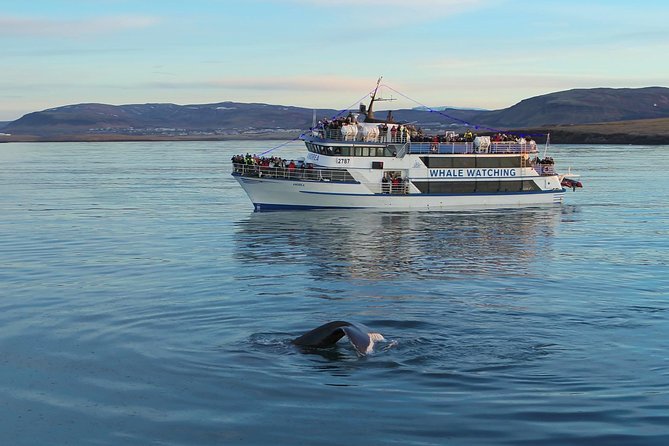
Whale watching cannot be guaranteed. A clear day may still bring an empty bay, while a gray day can produce a superb humpback sighting. One trip may find several whales, dolphins, porpoises, puffins, or only a distant glimpse.
Fog is the hardest condition because it limits visibility even when animals are nearby. Strong weather can also cancel the cruise. If the whale trip is canceled because of poor weather, you are offered another date or a full refund. If the boat goes out but no whales or dolphins appear, you receive a complimentary ticket for another trip.
That policy is helpful only if you have time to return. It is less useful for someone flying home the next day or following a packed itinerary. If seeing whales is the main reason you are booking, schedule this tour early in your Iceland visit so a retry is possible.
There have also been occasions when communication around cancellations or transfers caused confusion. Confirm the departure status and pickup details rather than relying on assumptions. Weather decisions can change quickly in Iceland.
Who will enjoy this tour most
I would choose this combination for a first visit, a family group, or a couple wanting two classic Iceland experiences in one booking. It works especially well for mixed riding ability because the guides can separate faster and slower riders.
It is also a good fit if you are unsure about horseback riding. The staff provide a safety briefing, match horses to ability, and help people mount. The horses are treated with care, and the guides explain the breed and the route rather than rushing everyone out of the stable.
Confident equestrians should book with realistic expectations. You may enjoy the horse, scenery, and chance to ride across lava fields, but the format is still a guided group outing. Tell the staff about your experience and ask about the faster group, but do not expect a private cross-country session.
I would think twice if you dislike cold, open-air activities or have no spare time for a weather-related change. You should also reconsider if you want guaranteed whale sightings. No operator can provide that.
What to pack and what to confirm
Wear layers that work for both land and sea. The stable supplies riding helmets, boots, and rainwear or warm clothing. The boat supplies warm overalls. You still need comfortable clothes, gloves, a hat, and shoes or trousers that can handle wet conditions.
Bring a camera with a secure strap, but keep your hands free when riding. Pack money for lunch and café purchases. Confirm hotel pickup if you want it, ask whether the return transfer is included, and check the precise boat departure time.
Free cancellation is available up to 24 hours before the start time for a full refund. Changes or cancellations inside that period are not accepted for a refund, except when poor weather causes the operator to cancel and offer a new date or full refund.
Should you book the horse and whale combination?
Book it if you want a well-rounded half-day beyond Reykjavik and like the idea of pairing a calm, close-up animal experience with a more uncertain wildlife search. The small riding group, patient staff, supplied equipment, hot drinks, and free whale-watching retry make the price easier to justify.
Book early, since the experience is commonly reserved well ahead of time, and leave room in your schedule for weather. If you have only one free day and cannot return for a second boat trip, treat the whales as a bonus rather than a promise.
Skip it if you want serious riding instruction, a guaranteed wildlife encounter, or a tightly timed connection. For most first-time visitors, though, the mix of Icelandic horses, black volcanic ground, and open water offers a memorable way to see more than Reykjavik.
FAQ
Where does the tour start?
The listed meeting point is Ishestar Horse Riding Centre at Sörlaskeið 26, 220 Hafnarfjörður, Iceland. The stated start time is 10:00 a.m.
Is hotel pickup included?
Hotel transfers may be available for an additional fee. Contact the supplier directly to confirm pickup details and purchase the transfer if needed.
How long does the experience last?
The tour is listed at approximately five hours and 30 minutes. The horse ride itself lasts about two and a half hours, followed by travel to Old Harbor and the whale-watching cruise.
What whale and dolphin species might I see?
The four most common species listed for Faxaflói Bay are minke whales, humpback whales, harbour porpoises, and white-beaked dolphins. Puffins and other seabirds may also be seen.
What happens if no whales or dolphins appear?
You receive a complimentary ticket to try the whale-watching trip again on the next available day. This is most useful if you have enough time to return.
What are the age and weight limits for horseback riding?
The minimum age is seven. Riders aged 14 and older need written parental permission to ride alone. The maximum riding weight is 110 kilograms, or 240 pounds.
What equipment is provided?
The riding portion includes a helmet, rubber boots, and rainwear or warm clothing. The boat provides warm overalls. Coffee, tea, and hot chocolate are included after the horse ride, while food and drinks are otherwise at your own expense.
Newly added around Reykjavik
- Reykjavik: Whale Watching & Lava Show★ 5.0 · 4 reviews
- Reykjavík: Horse Riding Tours★ 4.9 · 127 reviews
- Reykjavik: Whale & Marine Adventure Tour★ 4.3 · 71 reviews
- Luxury Private Transfer from Reykjavik to Keflavik Airport★ 5.0 · 9 reviews
- From Reykjavík: Viking Horseback Tour in Hafnarfjörður★ 4.9 · 112 reviews
- Day Trip to Snæfellsness Peninsula from Reykjavik★ 5.0 · 7 reviews
- Winter South Coast Day Tour by Minibus from Reykjavik★ 5.0 · 109 reviews
- Whale Watching and Marine Life Tour in Reykjavik★ 4.5 · 55 reviews
Reykjavik Whale Watching Tours, compared.
Whale Watching Cruise on the Amelia Rose Yacht
Read our review →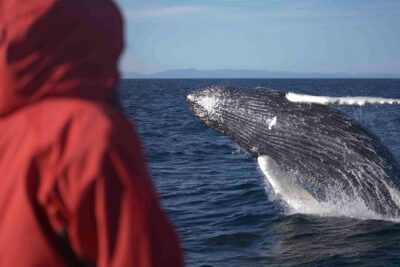
The Original Classic Whale Watching from Reykjavik
Read our review →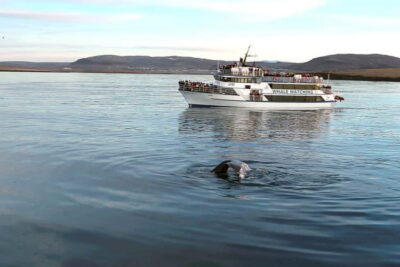
Whale Watching Tour with Professional Guide from Reykjavik
Read our review →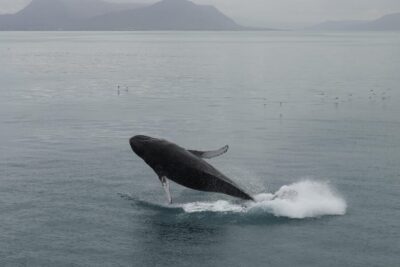
Whale Watching and Dolphin Watching Yacht Cruise
Read our review →Browse the lists this tour appears in