
Reviewed · VOLCANO AND REYKJANES PENINSULA TOURS
Reykjavik: 45-Minute Volcano Sightseeing Helicopter Tour
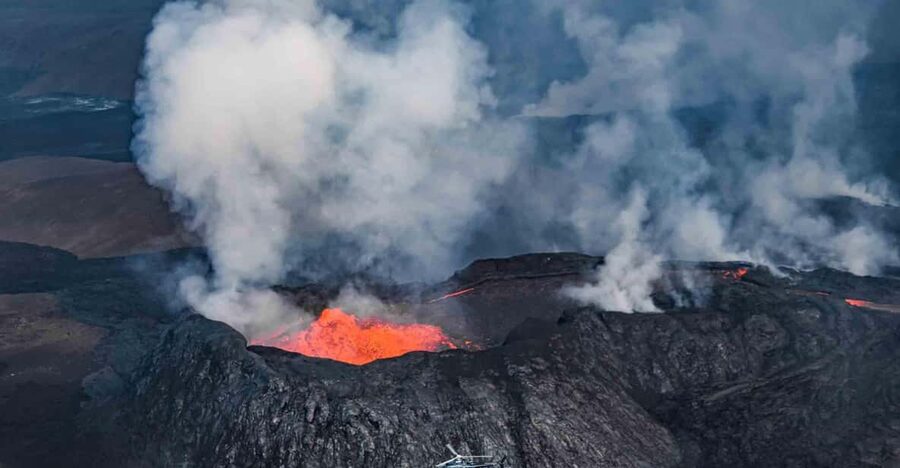
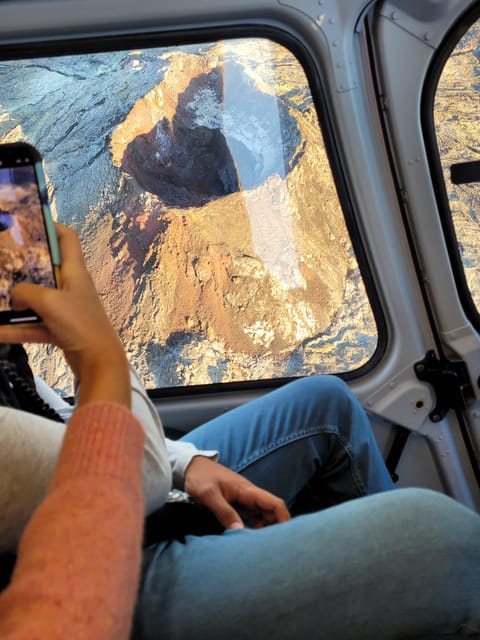
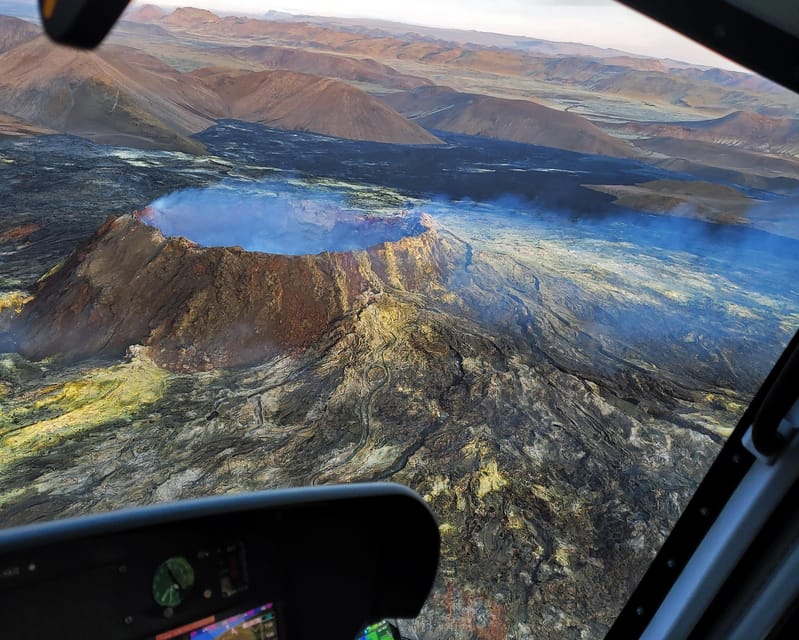
The most striking part of this 45-minute helicopter tour is the chance to look straight down on Iceland’s newest eruption areas. From the air, the Reykjanes Peninsula becomes a record of fire: old lava fields, fresh black flows, huge craters, and Sundhnúkahraun, the site of the March 2024 eruption.
I like the small group of up to five people, which gives everyone a useful view from the helicopter. I also like the route itself: you get the capital region, several recent eruption sites, and a final look toward Bessastaðir rather than spending the whole flight over one crater. The main drawback is the price, $624 per person, and there is no promise of visible flowing lava.
Key points to know before booking
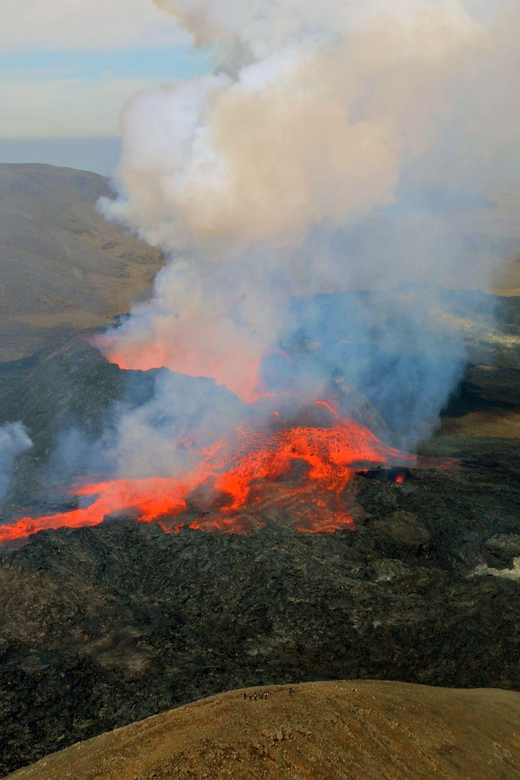
- Sundhnúkahraun from the air: See Iceland’s most recent listed eruption site from above, along with its fresh lava field.
- A compact five-seat flight: The small group keeps the experience personal and helps every passenger get good views.
- A useful volcanic timeline: The route connects the 2021 and 2022 Fagradalsfjall and Geldingadalir eruptions with the March 2024 activity.
- Only 45 minutes long: This fits neatly into a Reykjavik day, though the short flight leaves little room for delays or changes.
- Lava is never guaranteed: Volcanic activity changes, and weather or safety rules can cancel the flight.
- Easy city access: The Reykjavik FBO is about five minutes from central Reykjavik, beside the Berjaya hotel.
Why this helicopter flight is different
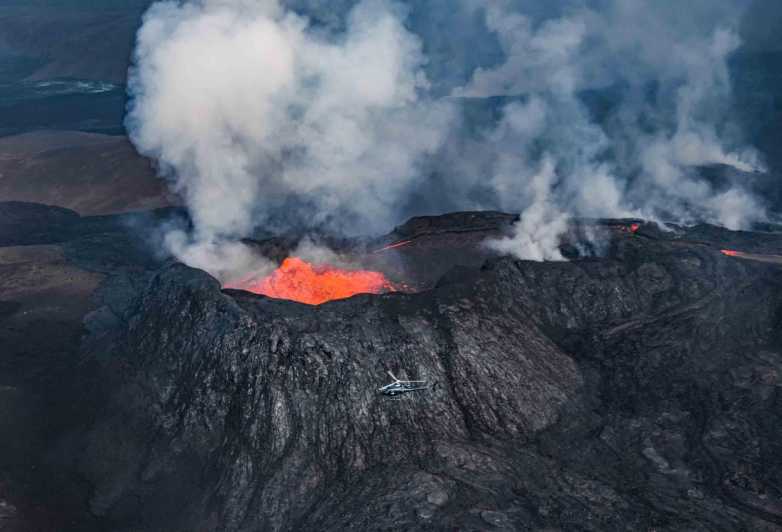
Iceland gives you plenty of ways to see lava fields, but most ground-level visits show only one slice of the story. From a helicopter, you can understand how the craters, fissures, and dark flows connect across the Reykjanes Peninsula. The view is not just bigger. It makes the volcanic activity easier to read.
This matters most at the newer eruption sites. On foot, rough lava can look like a single black mass. From above, you can pick out the shape of a crater, the direction of a flow, and the contrast between older fields and newer rock. If lava is flowing during your flight, the sight becomes far more dramatic, but the tour remains worthwhile even when the volcano is quiet.
The experience is operated by Atlantsflug, also known as Flightseeing. You meet the airport staff and pilot at the Reykjavik base, receive a short briefing, then walk onto the tarmac for departure. The pilot provides information in English throughout the flight.
You should think of this as a focused sightseeing flight, not a long expedition. You will not land on the peninsula or hike across the lava. Instead, you get a carefully timed aerial view, with the helicopter doing the hard work.
More Reykjavik Helicopter Tours:
- From Reykjavik: New Volcanic Area Helicopter Tour
★ 4.8 · 500 reviews - 1-Hour Helicopter Tour in Iceland: The Geothermal Tour
★ 4.9 · 263 reviews - Helicopter Tour with Mountain Summit Landing from Reykjavik
★ 5.0 · 243 reviews
From Reykjavik Airport to the Reykjanes Peninsula
The meeting point is at the Reykjavik FBO, in a building marked with the company’s sign next to the Berjaya hotel. Its location is a real advantage. You are only about five minutes from the city center, so the tour can fit before or after other Reykjavik plans without requiring a long transfer.
At the airport, the staff and pilot explain the route before taking you outside. This first briefing is short, but it gives you a chance to understand the basic plan and ask any immediate questions. The flight then begins with views over Reykjavik and the wider capital region.
The opening section lasts about five minutes. Do not expect the volcanic sights immediately. This short segment gives you a useful sense of the city’s position before the helicopter heads toward the peninsula. It also makes the flight feel like a journey from urban Iceland into an area shaped by eruptions.
Because the helicopter holds only five participants, the atmosphere should feel more direct than a large sightseeing flight. Several people praised the pilots for being friendly, informative, and attentive. One particularly useful detail from the feedback is that the pilot made several approaches around the active eruption area, giving passengers more than one angle for photographs.
Reading the old lava fields from above
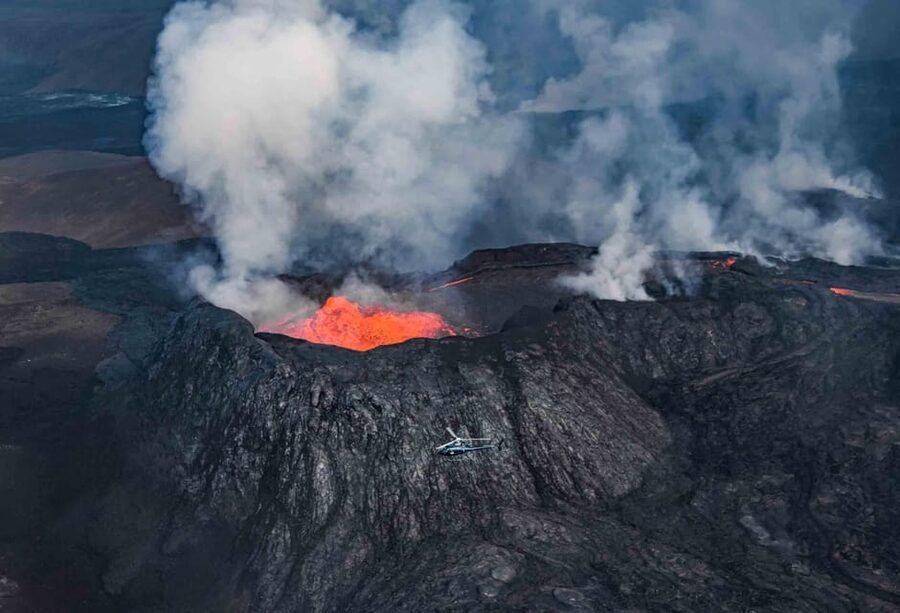
As you leave the capital area, the scenery changes to older lava fields. These flows date back hundreds of years, and they help set the scene for the newer volcanic sites ahead. From the ground, older lava can blend into the dark Icelandic terrain. From the air, its edges and broad spread become easier to see.
This part of the route is valuable because it gives you context. The Reykjanes Peninsula is not a place where one eruption suddenly appears in an otherwise untouched area. Volcanic activity has shaped the region over a long period, and the helicopter view lets you compare older rock with much newer flows.
Your pilot also points out various volcanic craters along the way. The exact view will depend on weather, visibility, and the route allowed on the day. Still, the stated plan is to connect the older fields with the more recent eruption zones rather than simply circle one feature.
I would pay close attention to the pilot’s explanation here. The flight moves quickly, and a crater can pass beneath you in seconds. If you want photographs, keep your camera ready, but do not spend the whole flight looking through a screen. The broad view is the point.
Fagradalsfjall and Geldingadalir, 2021 to 2022
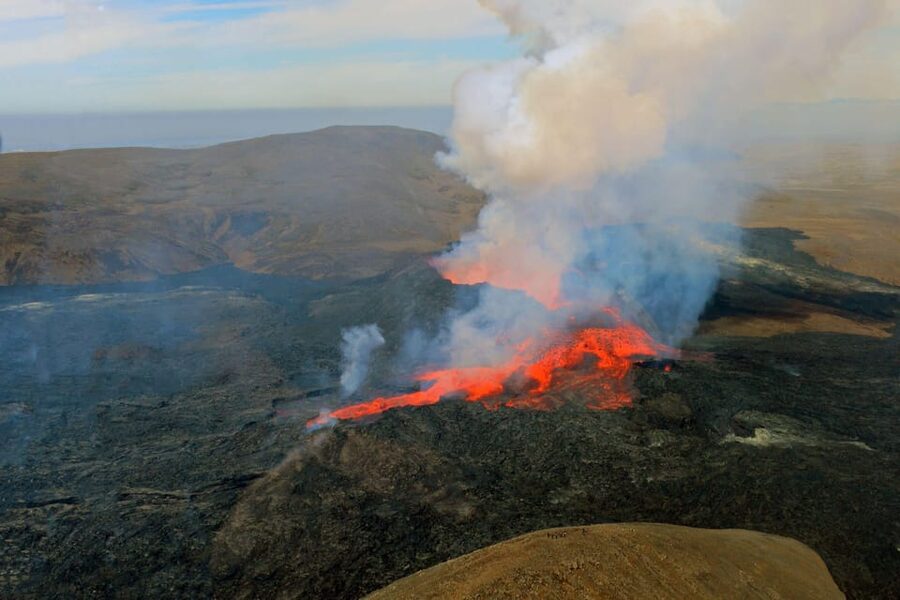
The route continues toward the large craters formed during the Fagradalsfjall and Geldingadalir eruptions from 2021 and 2022. These sites are among the key chapters in the recent volcanic story of the peninsula.
This is where the aerial viewpoint becomes especially useful. The craters and lava fields are part of a sequence, not isolated curiosities. Seeing them in the same flight as the March 2024 site helps you compare different areas of recent activity. The pilot’s commentary adds meaning to what might otherwise look like a series of dark ridges and circular depressions.
The tour description presents this section as a passage from the earlier eruptions to Sundhnúkahraun. That progression is one of the strongest reasons to choose the flight. You are not simply chasing a single photo opportunity. You are following a recent chapter in Iceland’s changing volcanic geography.
Conditions can affect what you see. Cloud, haze, and the position of the helicopter all matter. You may get a clear view of several craters, or some features may be partly obscured. The pilot’s route and safety requirements take priority, as they should.
More Volcano and Reykjanes Peninsula Tours:
- Golden Circle with Kerid Volcanic Crater Day Tour from Reykjavik
★ 4.5 · 2,826 reviews - Golden Circle, Volcano Crater and Blue Lagoon Small-Group Tour
★ 5.0 · 1,932 reviews - Reykjavík: Volcano Eruption Site and Reykjanes Hiking Tour
★ 4.6 · 1,066 reviews - Reykjavík: Guided Afternoon Hiking Tour to New Volcano Site
★ 4.4 · 934 reviews
Sundhnúkahraun and the March 2024 eruption site
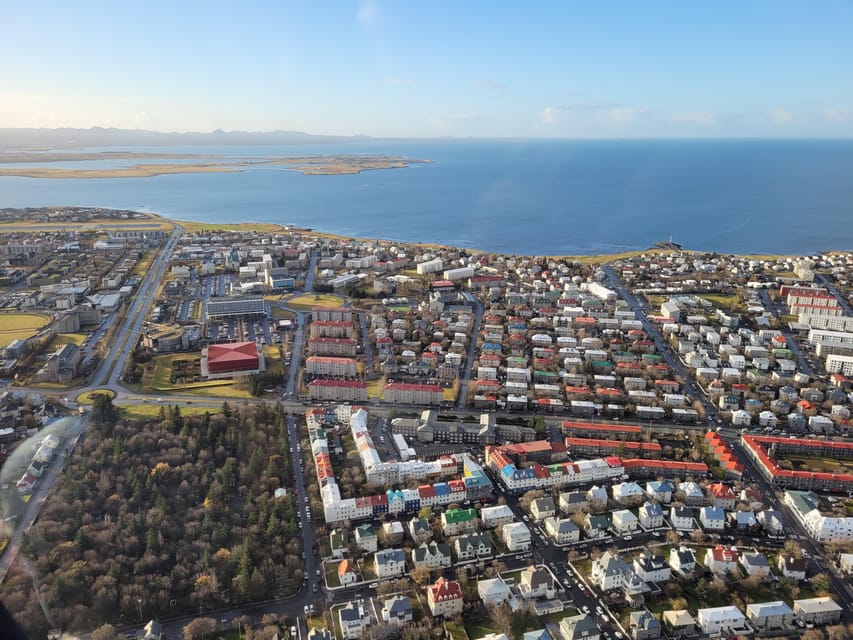
The main event is Sundhnúkahraun, identified as the most recent eruption site in Iceland for this experience, from March 2024. The helicopter circles over the lava fields, giving you a view that is difficult to match from the ground.
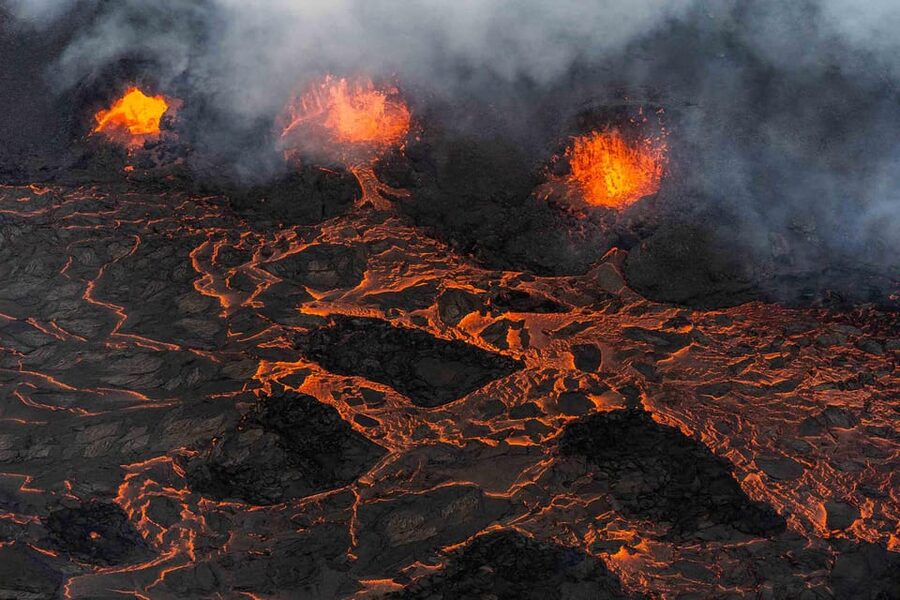
The best-case scenario is visible flowing lava. That is the image most people have in mind when they book a volcano flight, and the aerial view can give you a clean look at the glowing flow and the shape of the surrounding field. But you need to book with the right expectation: there is no guarantee that lava will be visible or active during your flight.
Volcanic eruptions are natural events, not scheduled performances. Activity may slow, stop, or be hidden from view. The operator also follows directions from Iceland’s Department of Civil Protection and Emergency Management. Those rules can change the route or prevent the flight from operating.
Even without visible lava, the site has value. Fresh lava fields look different from older flows, and the scale is easier to grasp from the helicopter. You can also see how the new activity fits into the wider volcanic area. One passenger described seeing the active site, three earlier volcanoes, and several new and old lava fields during the flight.
The pilot may make several approaches to the eruption area when conditions allow. That gives you more chances to see the site from different directions and can help with photographs. Still, no flight can promise a particular view.
The return over Bessastaðir and Reykjavik
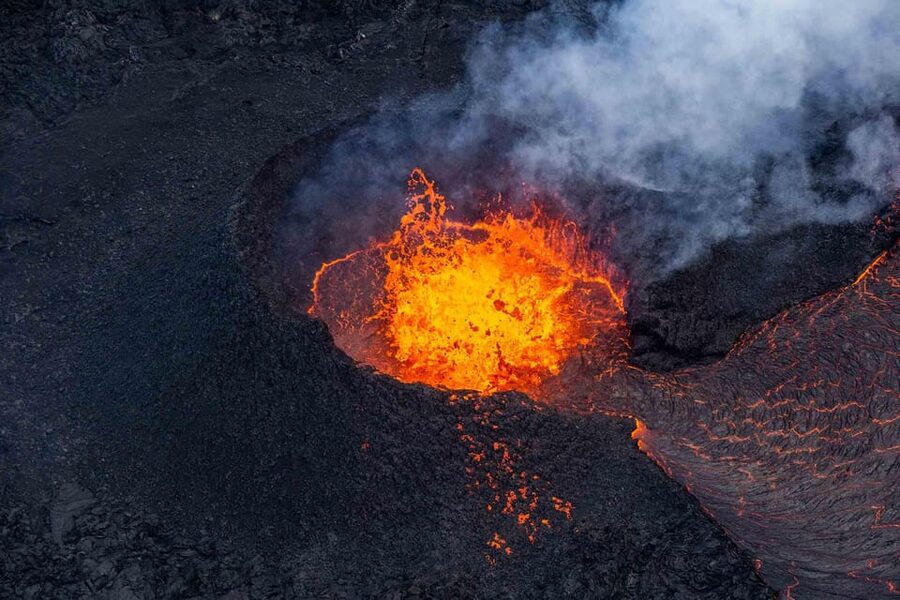
After the volcano section, the helicopter heads back toward the capital. The planned route includes about five minutes of sightseeing around Bessastaðir, the president’s home. You may be able to spot it if you know where to look.
This final feature is a small extra rather than the main purpose of the tour. It gives the return flight something to focus on and adds another piece of Icelandic geography to the trip. The helicopter then continues over Reykjavik before returning to the Atlantsflug base.
The full flight lasts 45 minutes, with about five minutes in the capital region, 30 minutes over the Reykjanes Peninsula, five minutes around Bessastaðir, and five minutes over Reykjavik. These times are approximate sightseeing segments within the stated itinerary, so weather, air traffic, and safety rules may affect the actual route.
A 45-minute flight is long enough to reach the major volcanic sights without taking over your day. It is also short enough that you should not expect a slow, detailed look at every crater. If you want an extended aerial tour or a landing on the peninsula, this is not that kind of trip.
Is $624 a fair price?
At $624 per person, this is an expensive excursion. You are paying for a helicopter, a pilot, airport operation, fuel, and access to a viewpoint that cannot be recreated by driving around Reykjavik. Taxes and airport fees are included, so the listed price is not likely to be followed by those extra charges.
The value depends on what you want from Iceland. If seeing volcanic activity from the air is a top priority, the price may feel justified, especially when the flight delivers clear views of Sundhnúkahraun and the earlier eruption sites. A five-person maximum also makes the experience feel more personal than a large aircraft tour.
If you are mainly looking for general scenery, the cost is harder to defend. Reykjavik and the Reykjanes Peninsula offer other ways to see lava fields, though they will not give you the same broad view or the possibility of looking directly into an eruption area from above.
I would book this for a major trip, a special occasion, or a first visit focused heavily on Iceland’s volcanic activity. I would skip it if the price would make the rest of your holiday uncomfortable. A helicopter flight is memorable, but it is still a short experience, and lava may not be active.
Weather, safety, and the lava question
All flights depend on weather. The operator must also follow rules set by Iceland’s Department of Civil Protection and Emergency Management. That means a flight can be changed or canceled for reasons outside the company’s control.
If the flight is canceled because of weather or another external factor, the operator will try to reschedule it or provide a full refund. You can also cancel up to 24 hours before departure for a full refund, according to the stated terms. The reserve-now-and-pay-later option lets you hold a place without paying immediately, which is useful when your Iceland plans are still shifting.
The practical lesson is simple: do not schedule this on the final morning of your trip if seeing the volcano is important to you. Leave room for a new flight time if poor weather interrupts the original plan. Starting early in your visit gives you a better chance of fitting in a rescheduled flight.
Children under two are not permitted. The tour is conducted in English, and the group is limited to five participants. The supplied information does not describe specific seating arrangements or camera rules, so you should ask the operator directly if those details matter to you.
What the strongest praise focuses on
The most consistent positive points are the pilots, the views, and the smooth operation. The pilots are described as friendly, informative, and kind, with clear explanations about the volcanic activity and Iceland. That matters on a short flight because good commentary helps you understand what you are seeing before the helicopter moves on.
The views also receive strong praise, especially when the route reaches the active eruption area. Clear approaches gave passengers several chances to see the site and take photographs. The combination of active or recent lava, older craters, and broad fields creates more variety than a flight focused on one crater.
The operation itself is generally described as easy and on time. That is important when you have connecting plans in Reykjavik. There was one practical problem reported at the meeting point: the door was locked and nobody was present for more than 30 minutes before staff returned. It appears to have been an isolated reception issue, but I would still arrive with enough time and keep the company’s contact details handy.
The overall rating is 4.6 from 45 reviews, with repeated five-star feedback about the flight and pilot. That does not remove the weather risk or the high price, but it supports the idea that the core experience is well run when conditions cooperate.
Who should book this flight?
I think this is best for you if volcanoes are a main reason for visiting Iceland. It suits photographers, geography fans, first-time visitors who want a strong overview of Reykjanes, and anyone who values a memorable view more than a low-cost activity.
It also works well if you have limited time. The base is close to central Reykjavik, and the flight lasts less than an hour. You can see a large area without committing to a full-day road trip.
You may want to choose something else if you dislike flying, need a guaranteed sight, or are paying mainly for visible lava. The operator is clear that flowing lava may not be present. A ground-based visit may offer more time in one place, while this tour gives you scale and access from above.
Should you book the Reykjavik volcano helicopter tour?
Book it if you want the best aerial view of Iceland’s recent eruption sites and can accept both the price and the uncertainty of volcanic activity. The route is well chosen, the group is small, and the pilot’s explanations add useful context to the fast-moving scenery.
Do not book it simply because you expect a guaranteed river of glowing lava. The flight can be excellent when the volcano is quiet, but its real strength is the complete view of Reykjanes: old lava fields, recent craters, Sundhnúkahraun, and Reykjavik in one compact trip.
My practical advice is to schedule it early in your stay, allow flexibility for weather, and treat flowing lava as a bonus. If that sounds fair, this is one of the more dramatic ways to understand Iceland’s newest volcanic chapter.
FAQ
Where does the helicopter tour begin?
The tour begins at the Reykjavik FBO, in a building marked with the operator’s sign next to the Berjaya hotel. It is about five minutes from central Reykjavik.
How long does the volcano helicopter tour last?
The flight lasts 45 minutes. The planned sightseeing includes about five minutes over the capital region, 30 minutes over the Reykjanes Peninsula, five minutes around Bessastaðir, and five minutes over Reykjavik.
What eruption sites will I see?
The route includes the Fagradalsfjall and Geldingadalir eruption areas from 2021 and 2022, as well as Sundhnúkahraun, identified for this experience as the March 2024 eruption site.
Will I definitely see flowing lava?
No. Volcanic activity may or may not be active during your visit, so visible flowing lava is not guaranteed.
How many people can join the flight?
The tour is limited to five participants, making it a small-group experience.
What language is the tour conducted in?
The live tour guide and pilot provide the experience in English.
What happens if bad weather cancels the flight?
Flights depend on weather and official safety rules. If the operator cancels because of weather or another factor outside its control, it will try to reschedule the flight or provide a full refund.
Newly added around Reykjavik
- Reykjavik: Whale Watching & Lava Show★ 5.0 · 4 reviews
- Reykjavík: Horse Riding Tours★ 4.9 · 127 reviews
- Reykjavik: Whale & Marine Adventure Tour★ 4.3 · 71 reviews
- Luxury Private Transfer from Reykjavik to Keflavik Airport★ 5.0 · 9 reviews
- From Reykjavík: Viking Horseback Tour in Hafnarfjörður★ 4.9 · 112 reviews
- Day Trip to Snæfellsness Peninsula from Reykjavik★ 5.0 · 7 reviews
- Winter South Coast Day Tour by Minibus from Reykjavik★ 5.0 · 109 reviews
- Whale Watching and Marine Life Tour in Reykjavik★ 4.5 · 55 reviews
Volcano and Reykjanes Peninsula Tours, compared.
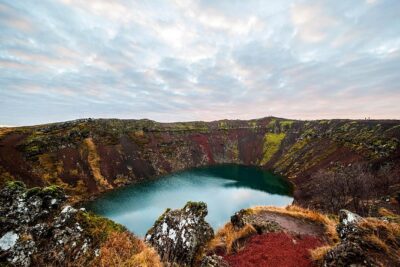
Golden Circle with Kerid Volcanic Crater Day Tour from Reykjavik
Read our review →
Golden Circle, Volcano Crater and Blue Lagoon Small-Group Tour
Read our review →
Volcano Eruption Site and Reykjanes Hiking Tour
Read our review →
Guided Afternoon Hiking Tour to New Volcano Site
Read our review →
Golden Circle and Kerid Volcanic Crater Small-Group Day Tour
Read our review →
Iceland Hiking Tour to Fagradalsfjall Volcano with Local Guide
Read our review →Browse the lists this tour appears in